


Inguistizia americana – la vera storia di Sacco e Vanzetti
Il 9 aprile 1927, il giudice Webster Thayer condannò entrambi gli uomini a morte “mediante il passaggio di una corrente elettrica attraverso il corpo”.

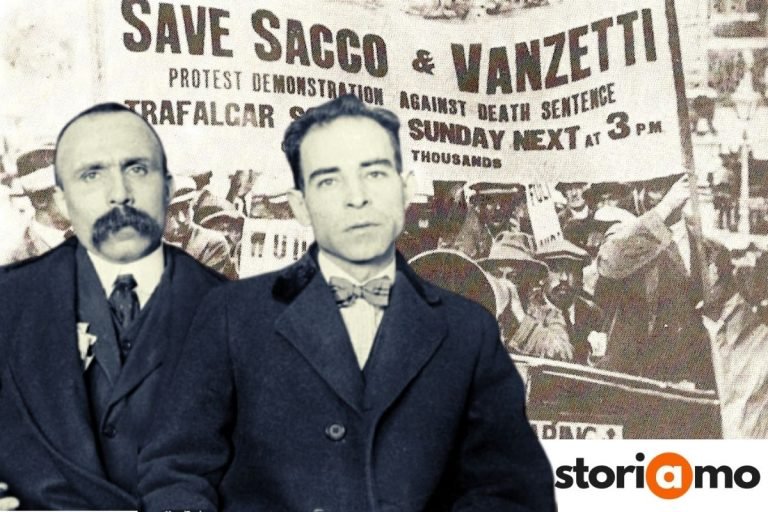
Nicola Sacco nacque il 22 aprile 1891 in Italia ed emigrò nel Massachusetts, dove lavorò come calzolaio. Bartolomeo Vanzetti nacque l’11 giugno 1888 a Villafalletto, in Italia, e divenne un venditore ambulante di pesce dopo essersi stabilito nello stesso Stato. Entrambi furono coinvolti nel movimento anarchico degli immigrati italiani dell’epoca.
Il 15 aprile 1920, un cassiere e una guardia giurata furono uccisi a colpi d’arma da fuoco durante una rapina a mano armata presso la Slater and Morrill Shoe Company a South Braintree, nel Massachusetts. Sacco e Vanzetti furono arrestati il 5 maggio 1920.
Il loro processo iniziò nel maggio del 1921. L’accusa poté presentare prove sulle loro convinzioni anarchiche, sulle loro origini di immigrati e sul fatto che avessero eluso la leva militare, elementi che non avevano nulla a che fare con la rapina in sé. Le testimonianze oculari erano contraddittorie. Il 14 luglio 1921, dopo alcune ore di deliberazione, la giuria li dichiarò entrambi colpevoli di omicidio premeditato.
I ricorsi in appello fallirono per altri sei anni. Le proteste si diffusero in tutto il mondo e giunsero richieste di grazia da parte di Albert Einstein, George Bernard Shaw e H.G. Wells.
Il 9 aprile 1927, il giudice Webster Thayer condannò entrambi gli uomini a morte “mediante il passaggio di una corrente elettrica attraverso il corpo”.
Mentre si avvicinava la data dell’esecuzione, Nicola Sacco e Bartolomeo Vanzetti si sedettero entrambi a scrivere una lettera a un ragazzo di quattordici anni di nome Dante, figlio di Sacco.
“Voglio che tu sia sempre il fratello migliore e più gentile per la tua sorellina Ines”, gli scrisse Sacco dalla sua cella.
Vanzetti scrisse allo stesso ragazzo, in una lettera datata poco prima di morire, promettendo a Dante che un giorno avrebbe trovato la prova dell’innocenza di suo padre.
Due uomini scrissero lettere d’addio a un adolescente mentre lo Stato si preparava a giustiziarli per un crimine che, fino alla fine, insistettero di non aver mai commesso.
Poco prima di morire, Vanzetti disse a un giornalista in visita qualcosa che sarebbe sopravvissuto al processo che lo condannò. “Se non fosse stato per queste cose, avrei potuto passare la vita a parlare agli angoli delle strade con uomini sprezzanti. Sarei potuto morire, senza lasciare traccia, sconosciuto, un fallimento. Ora non siamo un fallimento. Questa è la nostra carriera e il nostro trionfo.”
Sacco, con le sue ultime parole, lo espresse in modo più semplice: “Possono giustiziare il corpo, ma non possono giustiziare l’idea, che è destinata a vivere”.
Nicola Sacco e Bartolomeo Vanzetti furono giustiziati sulla sedia elettrica nel carcere statale di Charlestown poco dopo la mezzanotte del 23 agosto 1927.
Cinquant’anni dopo, esattamente nello stesso giorno, il governatore del Massachusetts Michael Dukakis firmò una proclamazione ufficiale sui due uomini che lo stato aveva messo a morte.
Dichiarò che “ogni stigma e disonore dovevano essere per sempre rimossi dai nomi” di Nicola Sacco e Bartolomeo Vanzetti, e proclamò il 23 agosto 1977 giorno della loro commemorazione. La legge del Massachusetts non gli permetteva di concedere la grazia a uomini che non erano più in vita per riceverla.
Dukakis fu cauto in ciò che disse e non disse. “Non siamo qui per dire se questi uomini sono colpevoli o innocenti”, affermò. «Siamo qui per affermare che gli elevati standard di giustizia, di cui noi del Massachusetts andiamo tanto fieri, hanno deluso Sacco e Vanzetti.»
Questa dichiarazione è ancora oggi agli atti, un riconoscimento ufficiale del fatto che il processo stesso aveva deluso due uomini che lo Stato aveva già condannato a morte.
Un calzolaio e un pescivendolo scrissero le loro ultime parole a un bambino anziché alla storia, e la storia le conservò comunque. Nicola Sacco e Bartolomeo Vanzetti non ebbero un secondo processo mentre erano ancora in vita. Ricevettero delle scuse con cinquant’anni di ritardo, e queste scuse portano ancora i loro nomi.
They wrote their goodbyes to a 14-year-old boy. Then the state executed them anyway.
Nicola Sacco was born on April 22, 1891, in Italy, and immigrated to Massachusetts, where he worked as a shoemaker. Bartolomeo Vanzetti was born on June 11, 1888, in Villafalletto, Italy, and became a fish peddler after settling in the same state. Both men were involved in the Italian immigrant anarchist movement of the era.
On April 15, 1920, a paymaster and a security guard were shot and killed during an armed robbery at the Slater and Morrill Shoe Company in South Braintree, Massachusetts. Sacco and Vanzetti were arrested on May 5, 1920.
Their trial began in May 1921. The prosecution was allowed to present evidence about their anarchist beliefs, their immigrant background, and the fact that they had dodged the military draft, none of which had anything to do with the robbery itself. Eyewitness testimony was contradictory. On July 14, 1921, after a few hours of deliberation, the jury convicted both men of first-degree murder.
Appeals failed for six more years. Protests spread across the world, and petitions for clemency came in from Albert Einstein, George Bernard Shaw, and H.G. Wells.
On April 9, 1927, Judge Webster Thayer sentenced both men to die “by the passage of a current of electricity through your body.”
As the execution date approached, Nicola Sacco and Bartolomeo Vanzetti each sat down to write a letter to a 14-year-old boy named Dante, Sacco’s own son.
“I want you to be always the more good and kind brother to your little sister Ines,” Sacco wrote to him from his cell.
Vanzetti wrote to the same boy, in a letter dated shortly before he died, promising Dante that he would one day find proof his father had been innocent.
Two men wrote farewell letters to a teenager while the state prepared to kill them for a crime they insisted, to the end, they never committed.
Shortly before his death, Vanzetti told a visiting reporter something that would outlive the trial that convicted him. “If it had not been for these things, I might have lived out my life talking at street corners to scorning men. I might have died, unmarked, unknown, a failure. Now we are not a failure. This is our career and our triumph.”
Sacco, in his own final words, put it more simply. “They can execute the body, but they cannot execute the idea which is bound to live.”
Nicola Sacco and Bartolomeo Vanzetti were executed in the electric chair at Charlestown State Prison just after midnight on August 23, 1927.
Fifty years later, to the day, Massachusetts Governor Michael Dukakis signed an official proclamation about the two men the state had put to death.
He declared that “any stigma and disgrace should be forever removed from the names” of Nicola Sacco and Bartolomeo Vanzetti, and named August 23, 1977, their memorial day. Massachusetts law didn’t allow him to issue a pardon to men who were no longer alive to receive one.
Dukakis was careful about what he was and wasn’t saying. “We are not here to say whether these men are guilty or innocent,” he stated. “We are here to say that the high standards of justice, which we in Massachusetts take such pride in, failed Sacco and Vanzetti.”
That proclamation still stands on the record today, an official acknowledgment that the trial itself had failed two men the state had already killed.
A shoemaker and a fish peddler wrote their last words to a child instead of to history, and history kept them anyway. Nicola Sacco and Bartolomeo Vanzetti didn’t get a second trial while they were alive to see it. They got an apology fifty years too late, and it still carries their names.